PBK· Mikel Rosenthal Case Study · 02 Design Systems
AVANT Communications · B2B Technology Services · 2021 – 2024 · Built from zero

Pathfinder
Design System

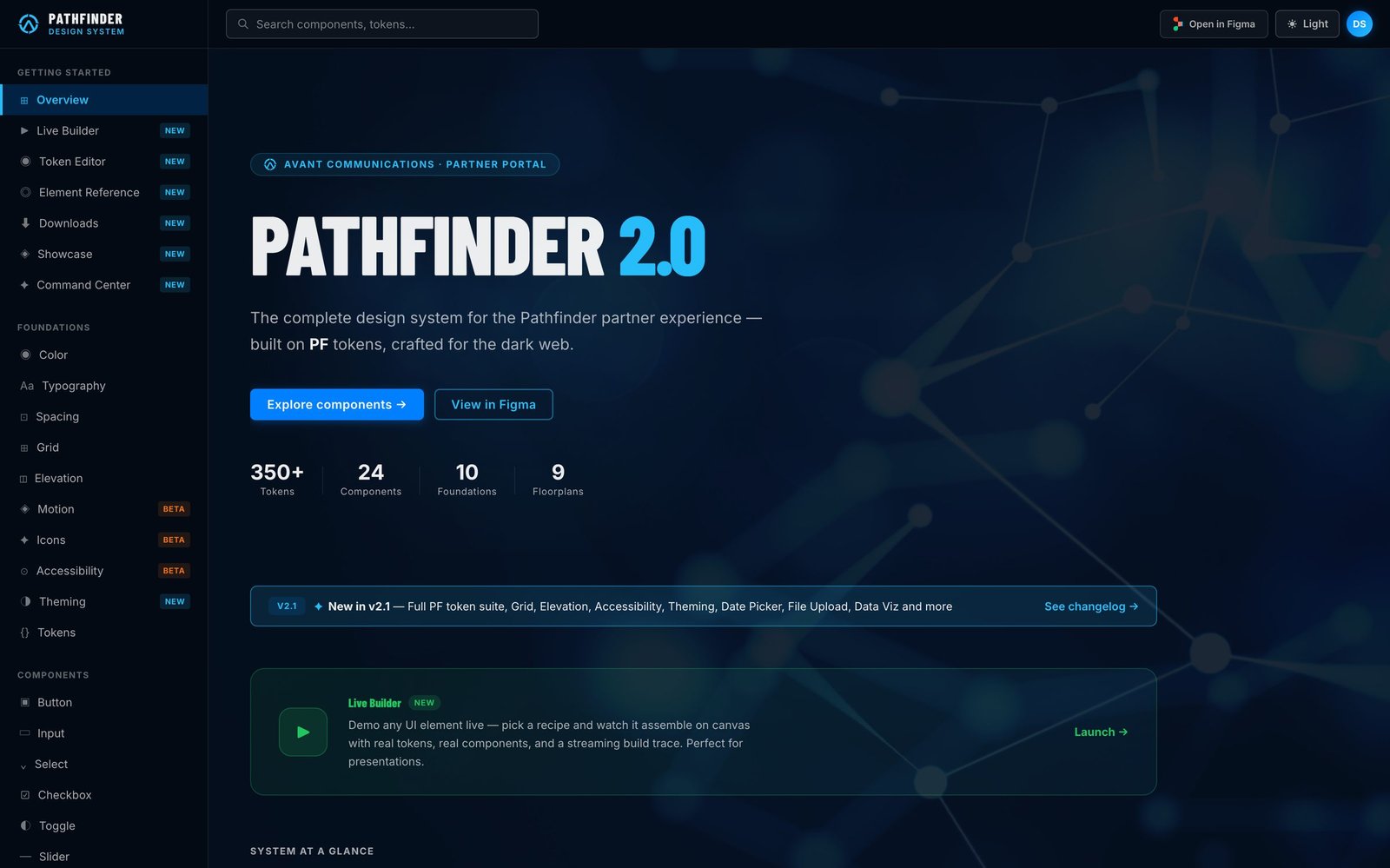
How I designed, built, and drove adoption of AVANT's first unified design system — token-driven foundations, a themeable component library across product and marketing, and the governance that kept 350+ contributors shipping consistently — over three years on a platform that thousands of technology advisors use to research, assess, quote, and close enterprise deals.

RoleSenior Product, UI/UX & Design Systems — system owner, end to end
ScopeResearch · Principles · Tokens · Theming · Components · Motion · A11y · Flows · Marketing Library · Governance
ProductPathfinder 2.0 → 3.0 — project dashboards, IQA assessments, quoting (CableQuote), knowledge centers
PartnersEngineering, brand, sales engineering, and 350+ internal managers & marketers
ToolsFigma (Variables, Dev Mode) · HTML/CSS prototypes · React handoff · Docs-as-product
01Context & ProblemWhy this work existed

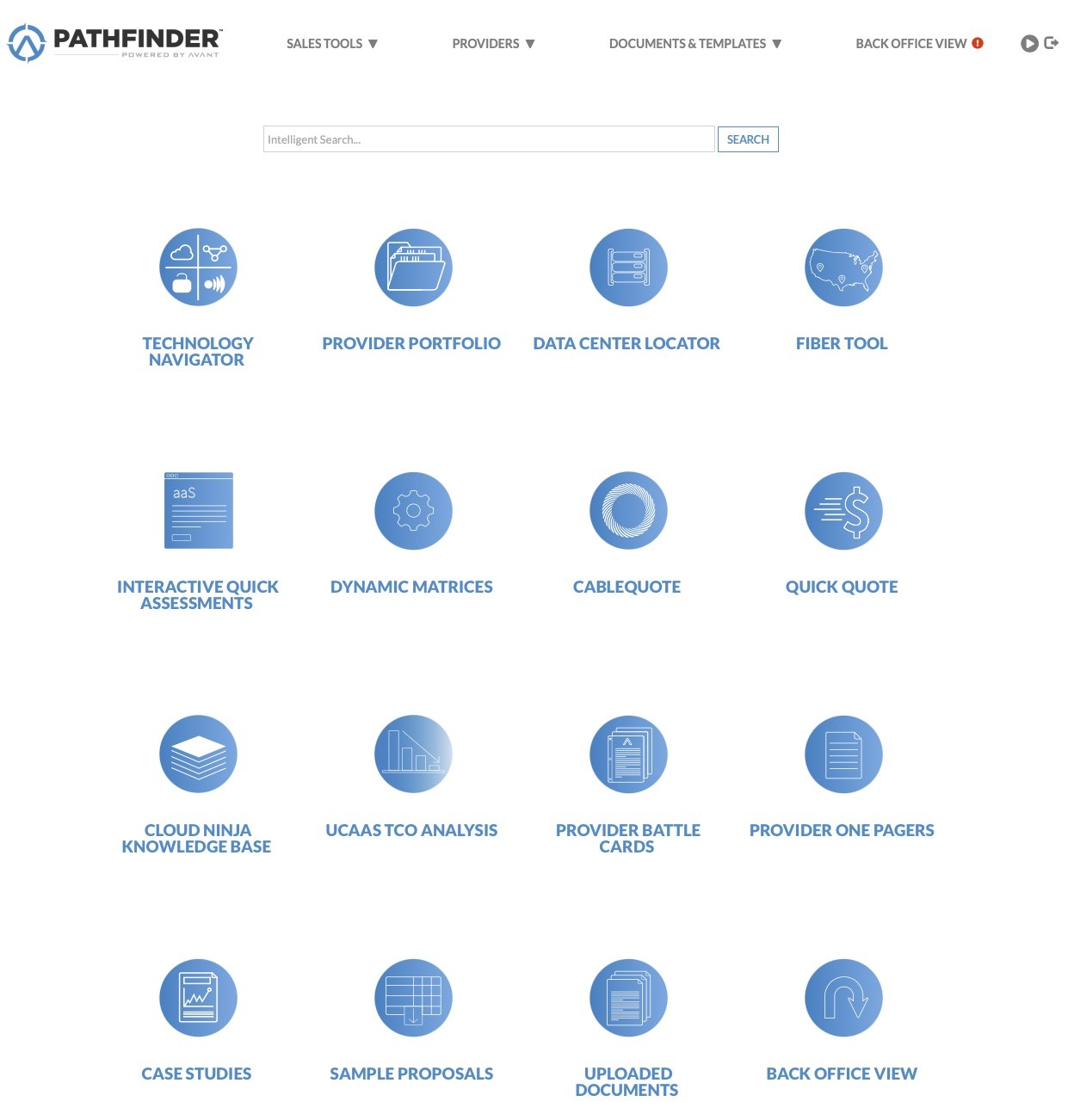
AVANT Communications is a distributor of enterprise technology services — CCaaS, cloud, SD-WAN, UCaaS, security — and Pathfinder is the platform its network of Trusted Advisors lives in: researching technologies, running Intelligent Qualifying Assessments, building quotes, and managing deals from first conversation to signed contract. When I joined in 2021, the platform had grown faster than its design language. Screens built in different eras used different components, different blues, different spacing logic — and marketing was producing assets at high volume with no shared foundations.

In a tool where advisors make six-figure technology recommendations, that isn't cosmetic. Inconsistency reads as unreliability. An advisor comparing carrier quotes doesn't separate "this table looks off" from "can I trust these numbers in front of my client?" — visual coherence is part of the platform's credibility. The data density made it harder: dashboards, assessment builders, and quote tables all competing for hierarchy on dark, information-rich screens.

The brief I gave myself: one visual language, expressed as tokens and components, that product engineers and marketers could both ship from — without asking permission.
02Three Years, Four PhasesProcess at a glance
2021 — PHASE 1

Audit & Foundations

Interface inventory, stakeholder research, system principles, token architecture, type and color foundations.

2022 — PHASE 2

Components & Proof

Core component library with full state coverage; the project flow as the proving ground; engineering parity established.

2023 — PHASE 3

Adoption & Governance

Federated contribution model, documentation-as-product, office hours, semantic versioning with migration notes.

2024 — PHASE 4

Marketing Library & Beyond

Token foundations extended to a self-serve marketing library; 350+ managers enabled; system carries Pathfinder through 3.0.

03Research & AuditDiscovery before drawing

I started with an interface inventory: screenshotting every distinct screen state across the platform and every active marketing template, then clustering them by pattern. The audit made the fragmentation measurable instead of anecdotal — and gave the system a business case before a single component existed.

BEFORE — AUDIT FINDINGS DISTINCT VALUES IN PRODUCTION 5+ PRIMARY BLUES 3 BUTTON SHAPES · 7 SIZES Aa Aa Aa MIXED TYPE STACKS AFTER — CONSOLIDATED SINGLE TOKEN SOURCE OF TRUTH COLOR.BRAND.PRIMARY BUTTON / 3 SIZES · 5 STATES Aa ONE STACK · 8-STEP SCALE Audit → argument FRAGMENTATION, MADE VISIBLE AND COUNTABLE
FIG 01 Interface inventory — fragmentation made countable. Diagram recreated for this case study.
04System PrinciplesDecision rules, not posters

Principles only matter if they settle arguments. These four were written to be invoked in reviews — each one traceable back to an audit finding, each one specific enough to say "no" with.

P·01

Credibility through clarity

Advisors put these numbers in front of their clients. Quote values, assessment results, and deal data get the strongest hierarchy and contrast on any screen — no exceptions for marketing.

P·02

Tokens before components

Decisions live in the token layer, where they can be changed once. Components consume intent, never raw values.

P·03

Designed or it isn't done

Loading, empty, error, and disabled states ship with v1 of every component. A pattern without its failure modes is a prototype.

P·04

Adoption over mandate

The system wins by being the fastest path, not the required one. Every governance decision is tested against: does this make the right way the easy way?

05Foundations — Token ArchitectureTokens before components

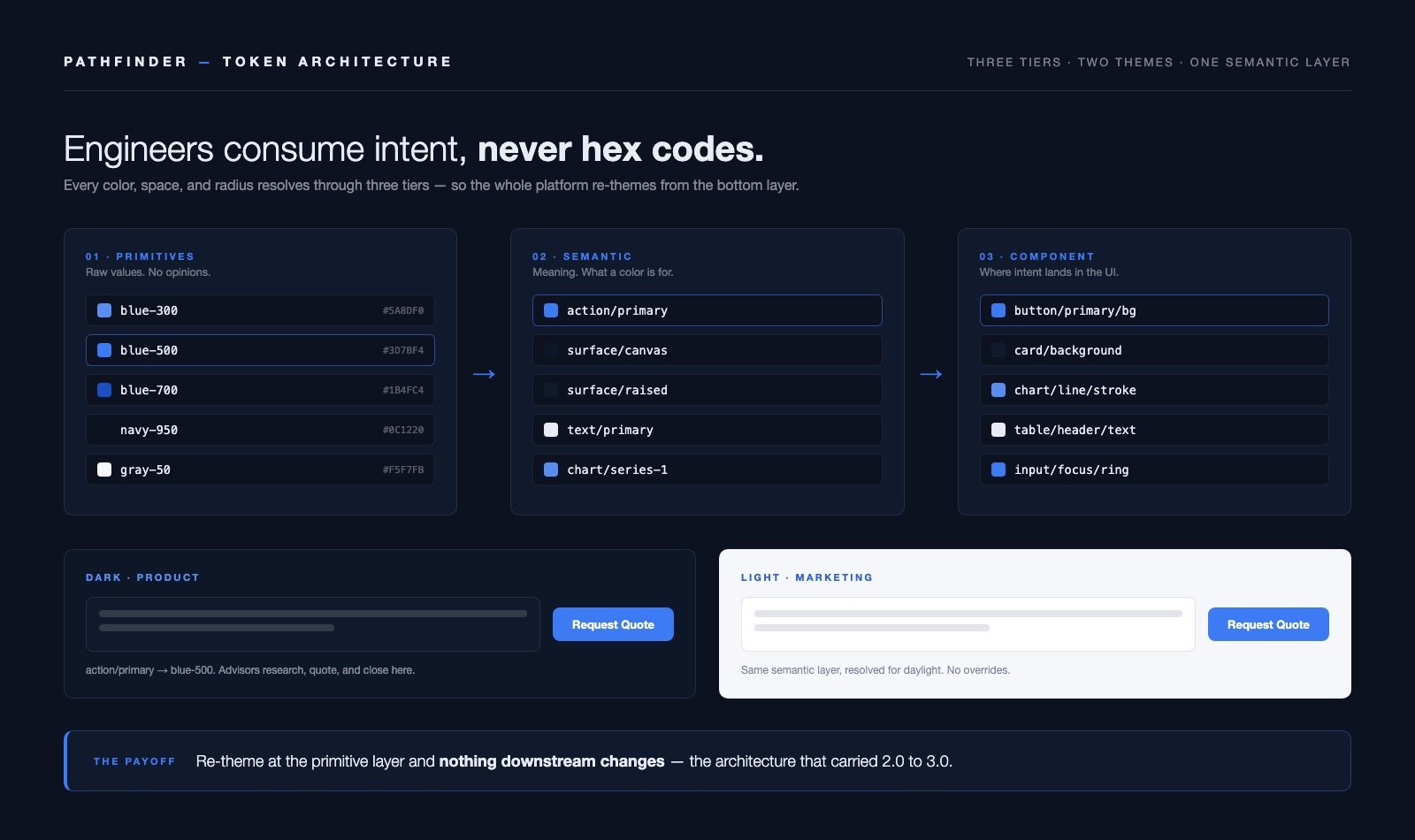
Pathfinder's system is built on a three-tier token architecture: primitives (raw values), semantic tokens (intent — what a value means), and component tokens (where it applies). Engineers consume tokens, not hex codes; when the brand evolves, the system re-themes from the primitive layer without touching components.

PRIMITIVES RAW VALUES blue.600 #0E6FB8 night.900 signal.500 space.4 = 16px type.scale.125 SEMANTIC INTENT — WHAT IT MEANS action.primary surface.raised status.complete border.focus space.stack.md COMPONENT WHERE IT APPLIES button.bg table.row.border card.shadow badge.status RE-THEME FROM THE PRIMITIVE LAYER — COMPONENTS NEVER TOUCH RAW VALUES
FIG 02 Pathfinder's three-tier token architecture — primitives → semantic → component.

Theming was the proof of the architecture. Pathfinder's product surfaces run dark — dense data reads better on dark ground, and advisors live in this tool all day — while marketing and enablement surfaces run light. Both resolve from the same semantic layer: surface.raised and text.heading map to different primitives per theme, and nothing downstream changes.

ONE SEMANTIC LAYER → TWO THEMES · ZERO COMPONENT CHANGES THEME / PRODUCT (DARK) ACME QUOTE 10.30.21 $124K MRC Add to project THEME / MARKETING (LIGHT) PARTNER ENABLEMENT $124K MRC Add to project SAME COMPONENT · SAME TOKENS — action.primary / surface.raised / text.heading RESOLVE PER THEME
FIG 03 Theming via token remap — dark product and light marketing from one semantic layer.
TYPE SCALE — 8 STEPS · 1.25 RATIO · TWO WEIGHTS PER STEP Display / 54 Heading / 33 Subhead / 21 Body / 16 — Quote terms an advisor can actually read. Caption / 13 — SLAs, contract terms, metadata. CONTRAST RULES AA minimum — all text AAA — quote values & status NUMERALS Tabular figures in all quote & billing contexts
FIG 04 Type foundations — scale, weights, and the data-legibility rules baked into tokens.
06Component LibraryAnatomy · States · Variants

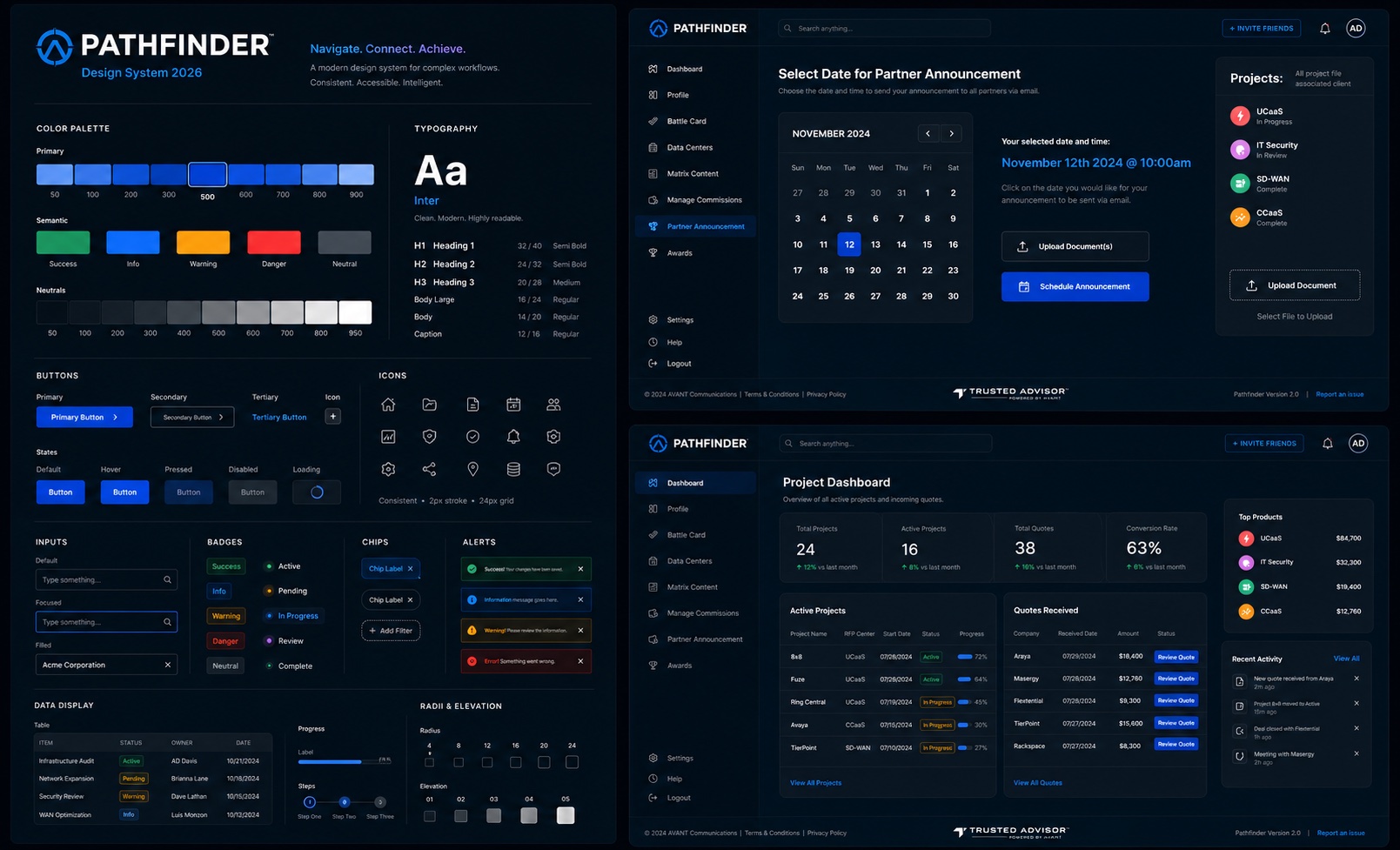
Every component shipped with documented anatomy, full state coverage, responsive behavior, and accessibility notes — built as Figma components with variables bound to the token tiers, and mirrored by engineering as coded equivalents. The rule: if a state isn't designed, it isn't done. Loading, error, empty, and disabled states were first-class, not afterthoughts — in a platform full of in-progress assessments and pending quotes, the in-between states are the product.

COMPONENT SPEC — QUOTE VALUE INPUT / DEFAULT Monthly recurring charge $ 12,500 Per location · before vendor promotions 1 LABEL — text.secondary · space.stack.xs 2 FIELD — input.border · radius.md 56px touch target · tabular figures 3 HELPER — persistent, never placeholder-only STATES — DESIGNED OR IT ISN'T DONE Default Focus Error Disabled LOADING
FIG 05 Anatomy spec — every component documented to this depth before engineering pickup.
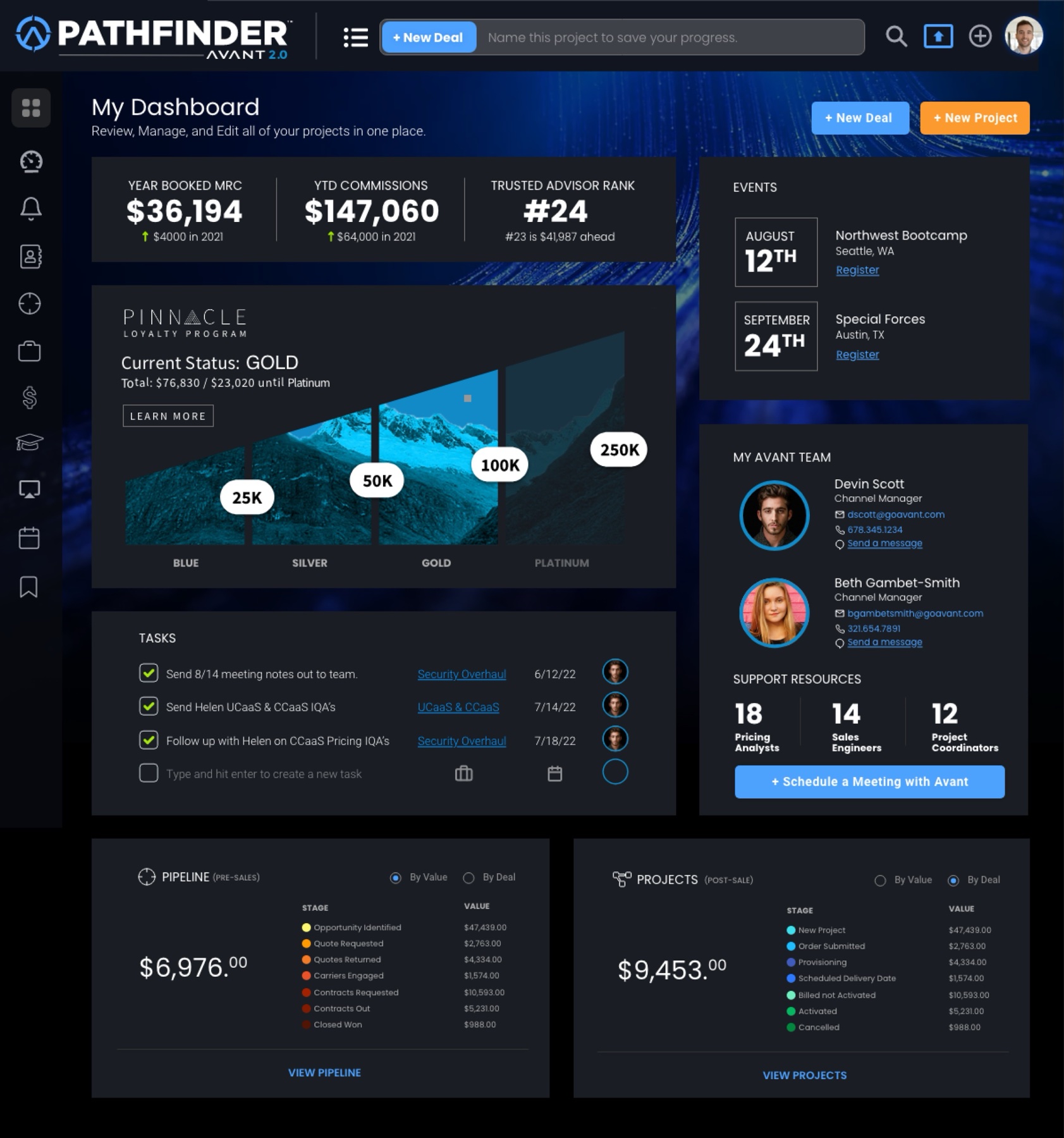
Pathfinder project dashboard — opportunities, deployments, billing, and platform centers, built on the system
FIG 06 Shipped: the project dashboard — opportunities, deployments, billing, and platform centers on system components.
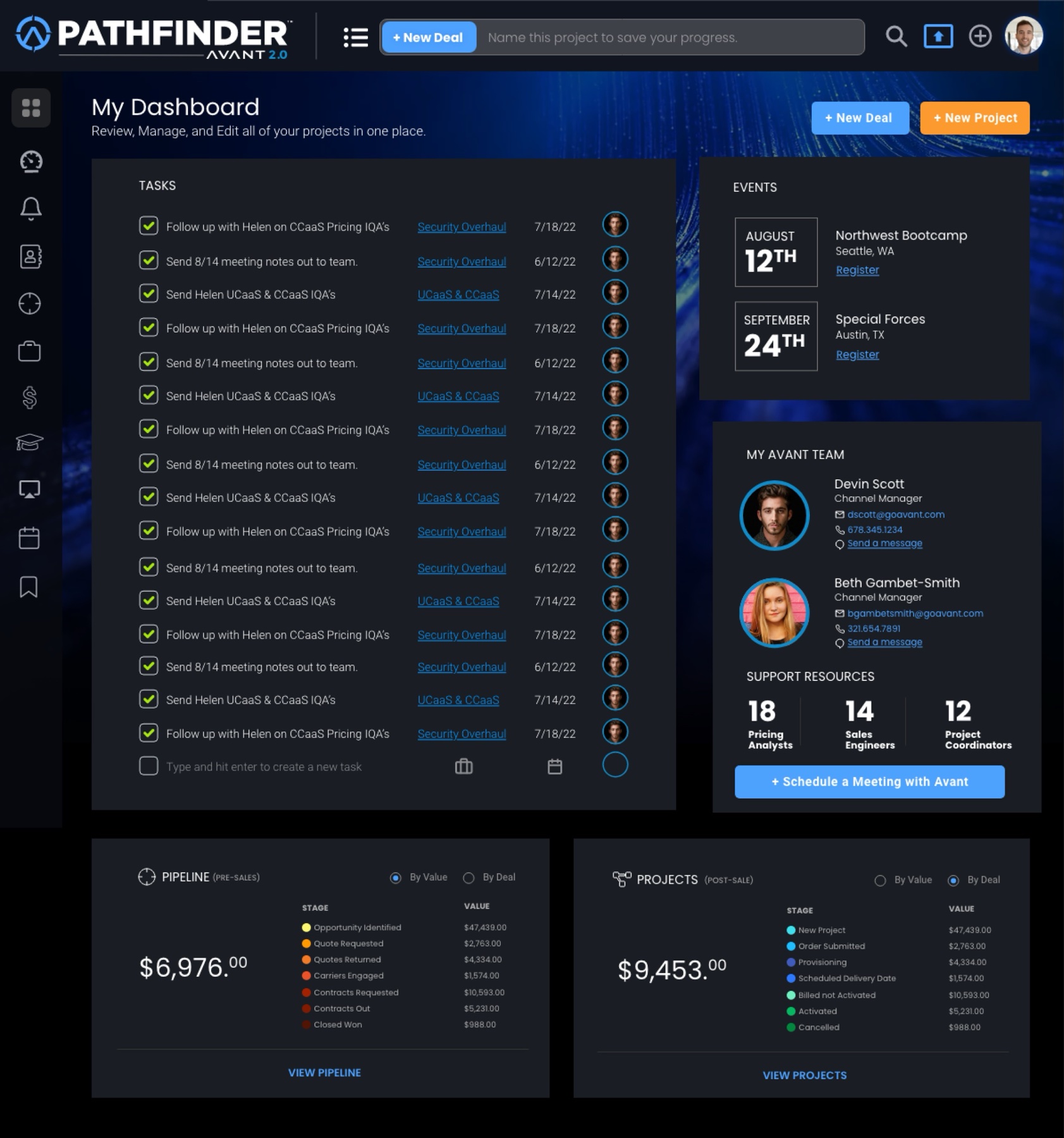
Pathfinder tools dashboard — data visualization, status, and team modules
FIG 07 Data-dense tools view — charts, status, and team modules sharing one rhythm.
Pathfinder project dashboard with research and documentation modules
FIG 08 Project workspace — research & documentation modules from the same library.
07Motion & InteractionTiming as a token

Motion was tokenized like everything else — a small set of durations and easings with assigned intent, so interactions felt consistent without every designer re-deciding timing. The voice of the motion: calm, brief, never decorative. In a tool advisors run their business on, animation exists to confirm and orient, not to entertain.

MOTION TOKENS — DURATION · EASING · INTENT motion.quick120ms · ease-outHover, toggle, focus ring motion.standard200ms · ease-in-outPanel open, accordion, tab change motion.deliberate320ms · spring(soft)Assessment complete, quote confirmation motion.reducedcrossfade onlyprefers-reduced-motion — always honored
FIG 09 The motion vocabulary — four tokens cover the platform; reduced-motion is a first-class theme.
08Flows & PrototypingThe system in motion

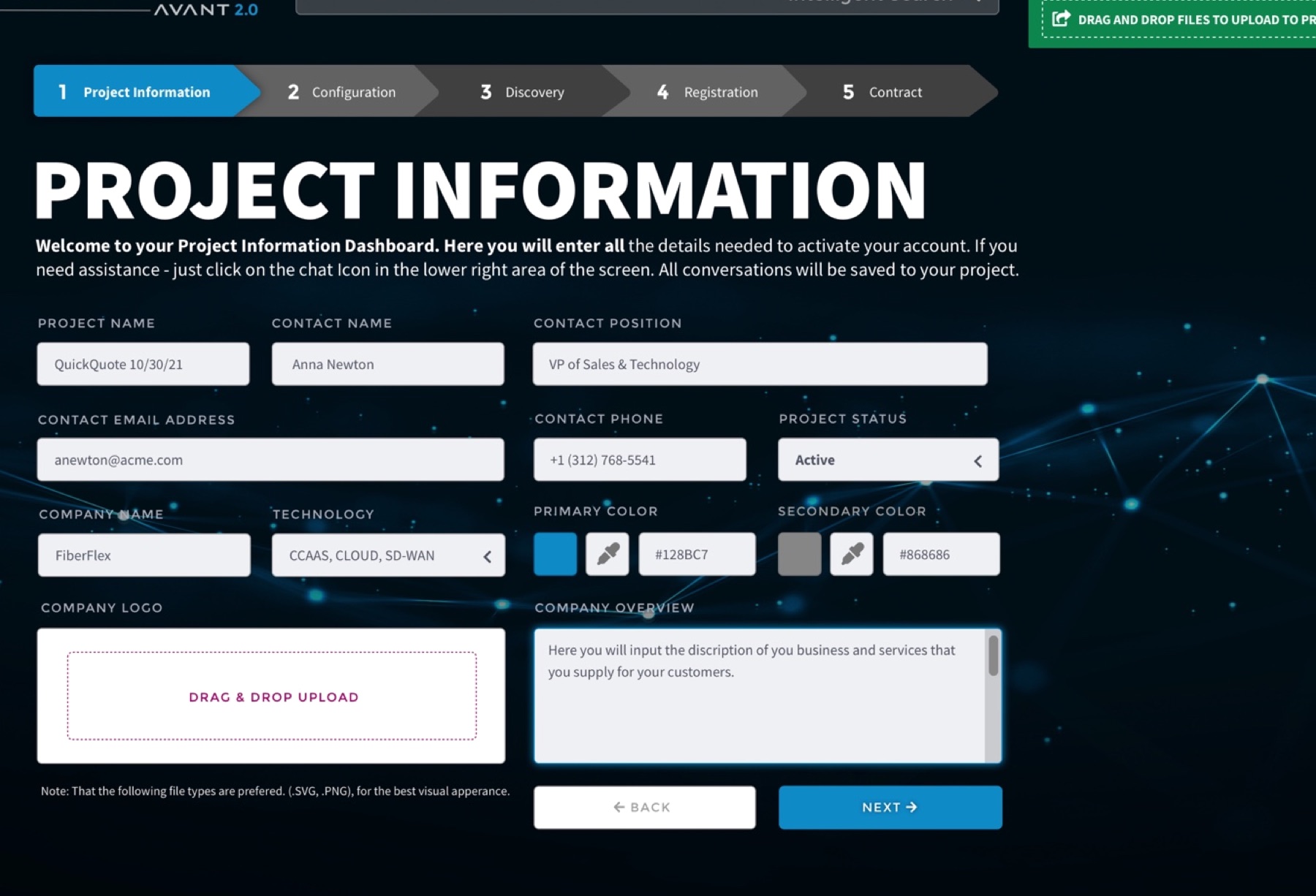
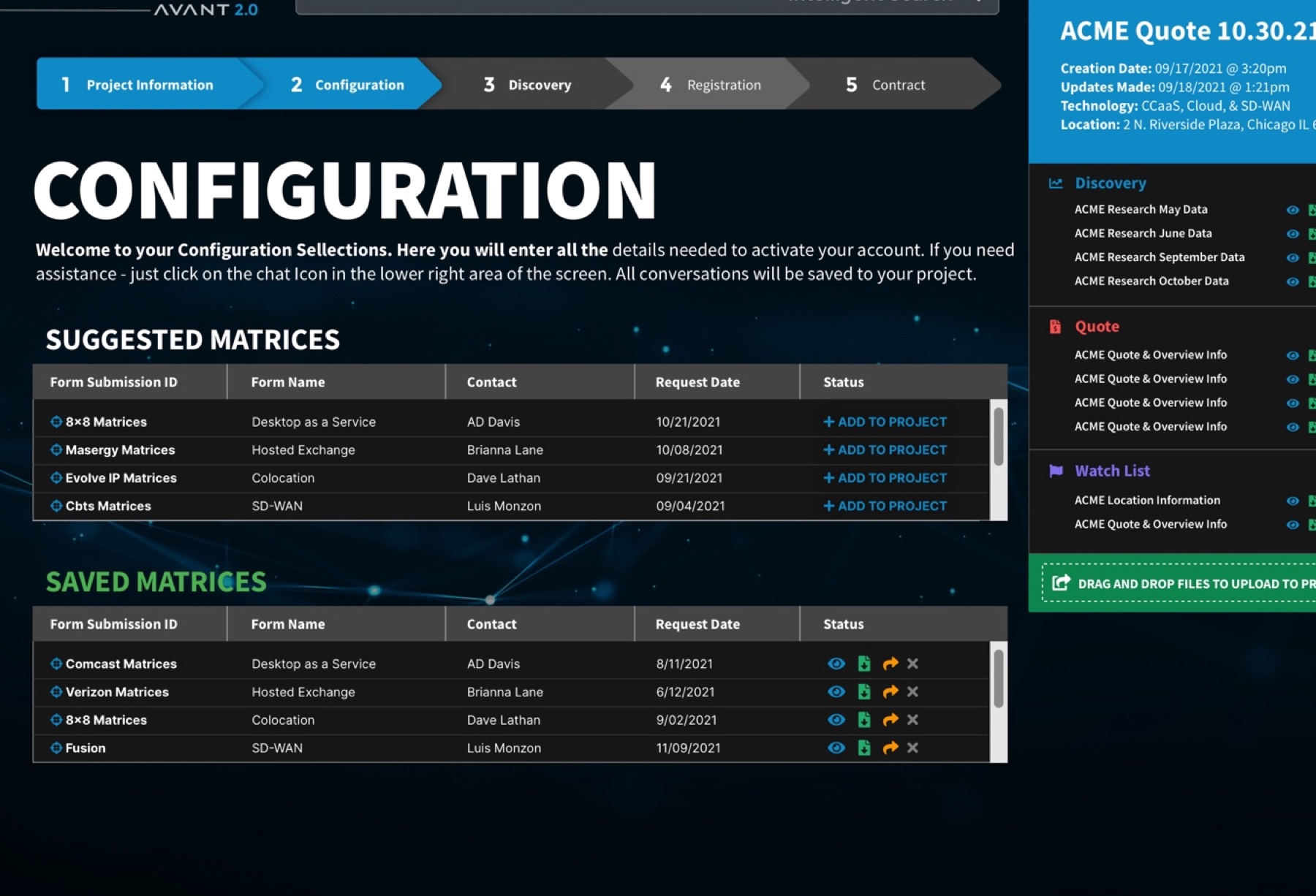
A design system proves itself in flows, not stickersheets. Pathfinder's proving ground was the project lifecycle — the five-step path every deal travels, from project information through configuration, discovery, registration, and contract. Each step is dense with tools (IQA assessments, research modules, quote builders), and each had to feel like one product.

Prototypes went beyond Figma where it mattered: interaction timing, input formatting, and validation behavior were built in HTML/CSS so we could feel the real thing, not a simulation of it.

USER FLOW — PROJECT LIFECYCLE · EVERY SCREEN FROM SYSTEM COMPONENTS 1 · Projectinformation FORM PATTERNS 2 · Config-uration SELECTORS · TABLES 3 · Discovery& IQAs ASSESSMENT BUILDER 4 · Regis-tration STATUS · TRACKING 5 · Contract ✓ CLOSED In-progress & cancelled states STATUS BADGES · RESUMABLE · NO DEAD ENDS
FIG 10 The proving-ground flow — the five-step project lifecycle, in-between states included.
Pathfinder Discovery step — suggested tools, research tools, and IQA status inside the five-step flow
FIG 11 Shipped: Discovery — step 3 of the lifecycle, with live IQA status.
Pathfinder IQA Builder — intelligent qualifying assessments across CCaaS, cloud, connectivity, SD-WAN, and security
FIG 12 Shipped: IQA Builder — assessments across CCaaS, cloud, SD-WAN, security.
09Accessibility by DefaultBuilt into tokens, not bolted on

Accessibility isn't a checklist run at the end — it's encoded where decisions live. Contrast minimums are enforced in the color token pairings themselves (a real discipline on dark, data-dense surfaces); focus behavior ships inside every component; reduced motion is a theme, not a special case.

10Design-to-Code ParityOne name, every layer

The quiet failure mode of design systems is drift between the Figma library and the coded one. Pathfinder's defense was naming parity: the same token name travels from Figma variable to CSS custom property to component prop, so designers and engineers are provably talking about the same thing. Handoff ran through Figma Dev Mode against that shared vocabulary.

FIGMA VARIABLE action/primary space/stack/md BOUND TO COMPONENT PROPS CSS CUSTOM PROPERTY --action-primary --space-stack-md GENERATED FROM TOKEN SOURCE REACT PROP <Button intent="primary" /> ONE VOCABULARY ACROSS DESIGN AND ENGINEERING — DRIFT BECOMES VISIBLE, AND FIXABLE, IMMEDIATELY
FIG 13 Naming parity — the same token from Figma to CSS to component API.
11The Marketing Design LibrarySame tokens · 350+ contributors

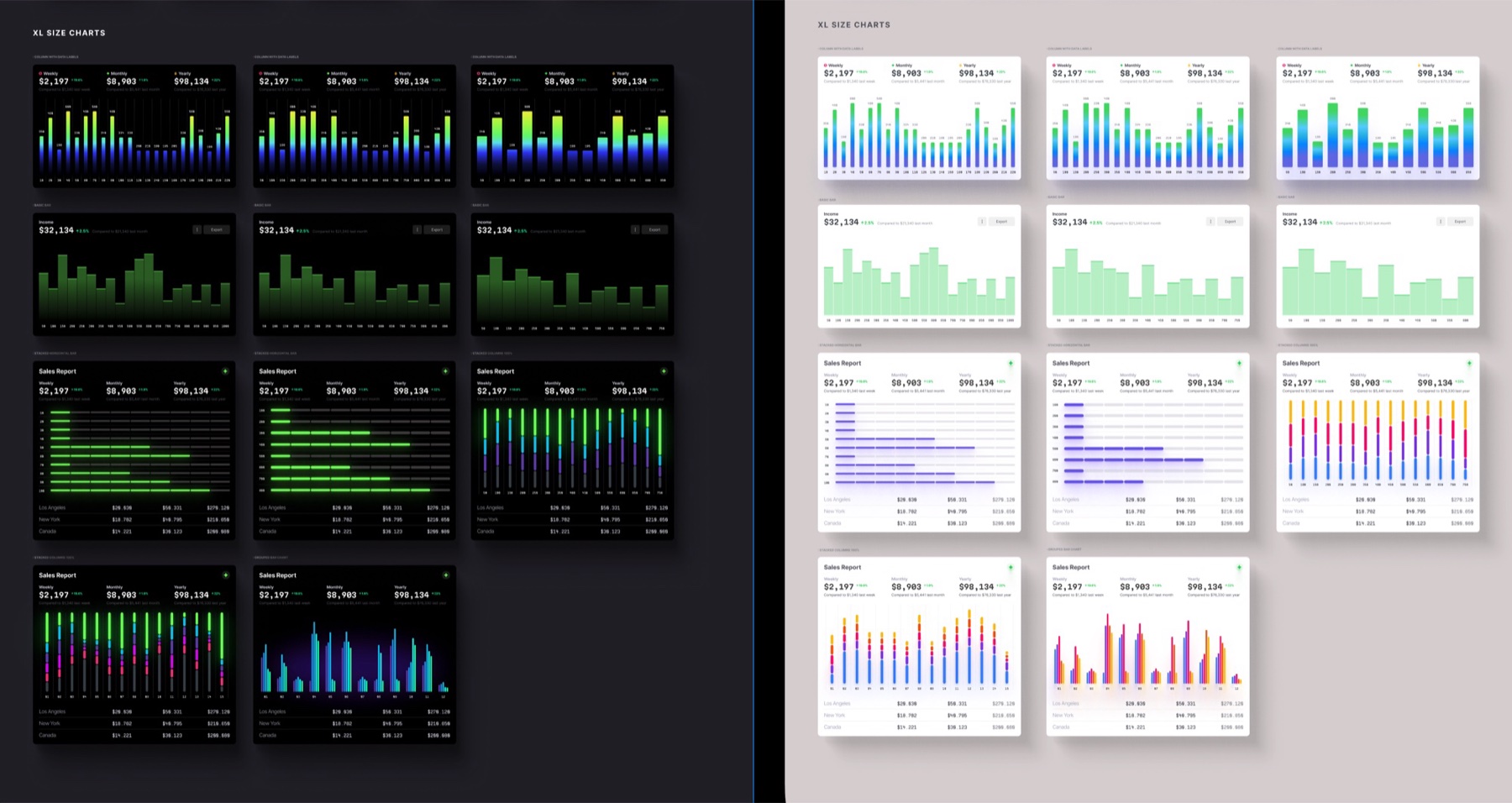
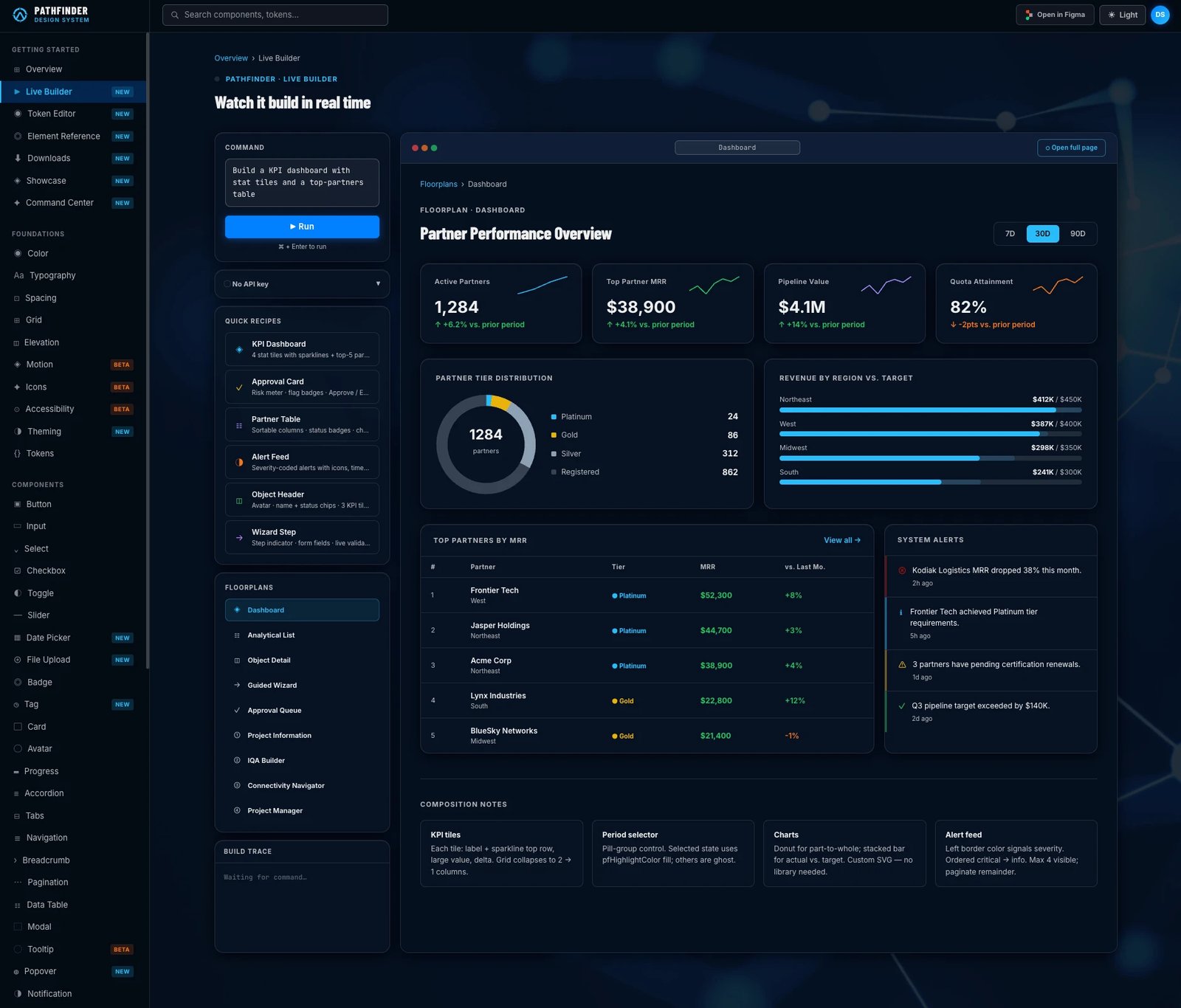
The second act of the system extended the same token foundations into a self-serve marketing design library: templates for the highest-volume asset types — partner enablement, campaigns, event material — locked to system foundations but flexible where campaigns needed expression. Marketing stopped rebuilding basics and brand reviews stopped re-flagging the same issues.

I drove adoption the unglamorous way — enablement sessions, documentation written for non-designers, and training across 350+ internal managers. A system nobody uses is a wiki page; this one became the default path because it was faster than the old way.

AVANT Marketing Design Library
FIG 14 Marketing Design Library — self-serve, token-locked templates.
AVANT Forge the Future campaign built on the library
FIG 15 "Forge the Future" campaign — brand expression on system rails.
12Governance & AdoptionHow it stayed alive
13Outcomes2021–2024
350+
Managers & marketers trained and shipping from the library
3yr
System owned end-to-end — v1 through Pathfinder 3.0
2×
One foundation, two systems — product UI and marketing library on shared tokens
5-step
Project lifecycle unified on one component language, end to end

The outcomes that mattered: the library became the default path for campaign work rather than a mandate; brand reviews shifted from policing basics to discussing ideas; new platform surfaces shipped visually consistent on day one because the foundations were already in the file; and accessibility findings stopped recurring because the fixes lived in the tokens. The system carried Pathfinder from 2.0 through 3.0 without a redesign — the architecture absorbed the evolution.

The honest lesson of three years: when the same feedback keeps arriving, the fix is upstream in the system, not in the individual deliverables. Pathfinder's system was that fix, applied twice — once for product, once for marketing.

14ReflectionWhat I'd carry forward

Tokens before components, always. Every hour spent on the semantic layer paid back tenfold as the platform evolved — 2.0 to 3.0 was a token remap and component growth, not a redesign.

Adoption is a design problem. The library won because using it was faster than not using it. No governance document survives contact with a deadline — but a better tool does.

Watch the detach rate, not the praise. Usage analytics told the truth about which components actually served people. The data contradicted my intuition more than once; the system got better every time I listened to it.

Where I'd push further today: AI-augmented documentation and contribution patterns — the approach I now use at PBK Studio, where docs stay current because the workflow maintains them, and where I carry prototypes past Figma into working code with Claude Code as a daily tool.

Product imagery © AVANT Communications. Token names, diagrams, and some details are recreated or generalized for this case study per confidentiality.